The Exhaustion That Won’t Quit
You sleep eight hours and still feel tired. Your lower back doesn’t care that you stretched this morning. Stress has become so normal you’ve stopped noticing it until it becomes a headache, a shoulder knot, or another night where sleep won’t come. Sound familiar?
Most people treat these symptoms as separate problems. A new pillow for the neck. An anti-inflammatory for the back. A melatonin tablet for sleep. The fixes are temporary because they target symptoms, not the source.
What hydrotherapy does is different. The combination of warm water, targeted jet pressure, and buoyancy addresses the physical tension and nervous system activation that drive most of these issues at once. That’s why regular hot tub use has been associated, in peer-reviewed research, with measurable improvements in sleep quality, chronic pain management, blood pressure regulation, and stress reduction.
Here’s what Arizona homeowners are learning, often after years of looking for answers elsewhere.
What Hydrotherapy Actually Does to the Body
Hydrotherapy is not a wellness trend. It has been used medicinally for thousands of years across cultures from ancient Rome to traditional Japanese onsen bathing. The modern spa brings the same principles into the backyard with precision engineering.
The mechanism works through three channels simultaneously. Warm water at around 100 to 104 degrees Fahrenheit dilates blood vessels, increasing circulation and allowing the cardiovascular system to work more efficiently at rest. Buoyancy reduces the effective body weight by up to 90 percent in water, releasing pressure from joints, the spine, and inflamed soft tissue. Jet pressure delivers targeted massage to specific muscle groups, triggering the release of endorphins and reducing cortisol levels.
None of these effects happen in isolation. They happen at the same time, in combination, for the duration of every soak. That synergy is what makes hydrotherapy so consistently effective and so difficult to replicate with any single therapeutic modality.

Sleep: The Benefit Most Arizona Hot Tub Owners Notice First
Sleep disturbance is one of the most common health complaints in America, and Arizona’s dry heat adds an extra layer of difficulty for those who struggle to wind down. The body needs to drop its core temperature slightly to initiate deep sleep, and soaking in a hot tub one to two hours before bed helps trigger this transition.
Here’s why it works: entering warm water raises core body temperature. When you exit the spa, that temperature drops rapidly. The nervous system reads this drop as a sleep cue, accelerating the transition into the deeper stages of sleep that drive physical recovery.
A study published in the journal Sleep Medicine Reviews found that passive body heating through warm baths or spa immersion, when timed appropriately before sleep, can improve sleep onset speed by up to 36 percent. For Arizona homeowners dealing with restless nights, this is not a minor benefit.
Chronic Pain and Arthritis: Why Warm Water Works When Other Treatments Don’t
Arthritis, lower back pain, fibromyalgia, and post-workout muscle soreness all share a common driver: inflammation. Heat increases circulation to inflamed areas, which helps flush out inflammatory compounds and brings fresh oxygenated blood to healing tissue. Buoyancy removes gravitational compression from affected joints, allowing movement that would otherwise be painful on land.
The Arthritis Foundation has noted warm water therapy as a clinically supported complement to traditional arthritis management. Hot tub use allows people with joint conditions to perform range-of-motion movements with significantly less pain than they could on dry land. For older adults managing degenerative joint disease, this can be a meaningful quality-of-life improvement.
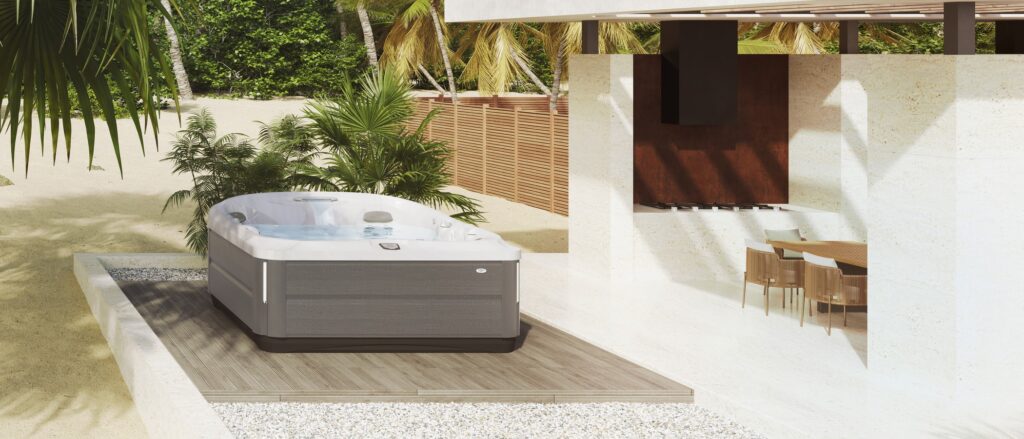
The jet systems in models like the Sundance 880 Series Cameo and the 980 Series Kingston are specifically engineered to deliver targeted pressure to lumbar, shoulder, hip, and lower leg muscle groups. This isn’t a generic massage. It’s directional hydrotherapy that addresses the specific areas where chronic pain tends to accumulate.
Stress Reduction That Lasts Beyond the Soak
The stress response triggers cortisol, tightens muscles, elevates heart rate, and keeps the nervous system in a state of low-level alert. This is functional in genuine emergencies. It’s destructive when it becomes your baseline.
Soaking in a hot tub activates the parasympathetic nervous system, which is responsible for the rest-and-digest state that counterbalances chronic stress. Cortisol levels drop. Muscle tension releases. Heart rate variability improves. These are not subjective impressions. They’re measurable physiological changes that occur during and after hydrotherapy sessions.
For Arizona homeowners who use their hot tub consistently, the stress relief benefit tends to compound over time. The ritual of setting aside 20 to 30 minutes each evening for a soak creates a behavioral boundary between work and rest that, on its own, reduces ambient stress. The hydrotherapy accelerates the physiological effect.
Cardiovascular Health: The Benefit Researchers Are Paying Closer Attention To
The mechanism involves repeated mild stress on the cardiovascular system through heat, which, like moderate exercise, improves vascular flexibility and cardiac efficiency.
For people who struggle with exercise due to joint pain, mobility limitations, or recovery from injury, regular hot tub use offers a low-impact path to some of the cardiovascular conditioning benefits that would otherwise require physical exertion. This is not a replacement for exercise, but it is a meaningful supplement, particularly for older adults or those with movement restrictions.
The warm water also supports blood pressure regulation by encouraging vasodilation, the relaxation and widening of blood vessels. Over time, regular soaking has been associated with modestly reduced resting blood pressure in people with mild hypertension.
Social and Mental Health Benefits That Are Easy to Overlook
Hot tubs create something increasingly rare in modern life: a space without screens. No notifications, no half-attention, no ambient distraction. Time spent in a spa with a partner, family, or close friends tends to produce conversation that feels different from the kind you have over a dinner table or a television.
This is not a small thing. Connection, specifically undistracted, physically present connection, is one of the most well-documented contributors to long-term mental health. The spa creates the conditions for it without requiring anyone to plan it deliberately.
For parents with teenagers, couples who are both working long hours, or families who have started to feel like they’re living parallel lives in the same house, the hot tub often becomes the unexpected centerpiece of reconnection.
Frequently Asked Questions About Hot Tub Health Benefits
How long should I soak in a hot tub to see health benefits?
Most research supports sessions of 15 to 30 minutes for optimal results. Longer sessions don’t typically multiply the benefit and can cause dehydration. Soaking three to five times per week produces the most consistent outcomes for sleep, stress, and pain management.
Is it safe to use a hot tub every day?
Yes, for most healthy adults. Daily soaking at moderate temperatures of 100 to 102 degrees Fahrenheit is generally safe and can compound the benefits over time. Anyone with a heart condition, high blood pressure, or who is pregnant should consult their physician first.
Can a hot tub help with lower back pain?
Many owners report significant improvement in lower back pain through regular hot tub use. The combination of heat, buoyancy, and targeted jet pressure addresses muscle tension and spinal compression simultaneously. Hot tubs with lounge seats and lumbar-directed jets are particularly effective.
What temperature should an Arizona hot tub be set to in summer?
In Arizona’s summer heat, many owners prefer to dial the temperature down to 98 to 100 degrees Fahrenheit to make soaking comfortable in the warm outdoor air. The hydrotherapy benefits persist at slightly lower temperatures, particularly when jets are active.
Do hot tubs help with anxiety or depression?
While hot tubs are not a medical treatment, regular hydrotherapy has been associated with reduced cortisol levels, improved sleep quality, and increased feelings of calm and well-being. These effects can complement other mental health strategies when used consistently.
A Different Kind of Everyday
The homeowners who get the most from their hot tub are not the ones who use it for special occasions. They’re the ones who make it part of how they end every day. Twenty minutes before bed. A soak after a long run. Sitting outside on a Thursday night with nowhere to be.
The health benefits follow consistent use because the physiology of hydrotherapy responds to repetition. The more you use it, the more the body adapts to the ritual of warm water, released tension, and deliberate rest.
Southwest Spas and Pools carries Sundance Spas and Dream Maker hot tubs across our Scottsdale, Gilbert, and Mesa showrooms. Every model on our floor is selected because it delivers genuine hydrotherapy, not just warm water with marketing attached. Come visit us and find the one that fits your body, your backyard, and your life.